Television's Centennial Secret: The Infrastructure That Refuses to Die
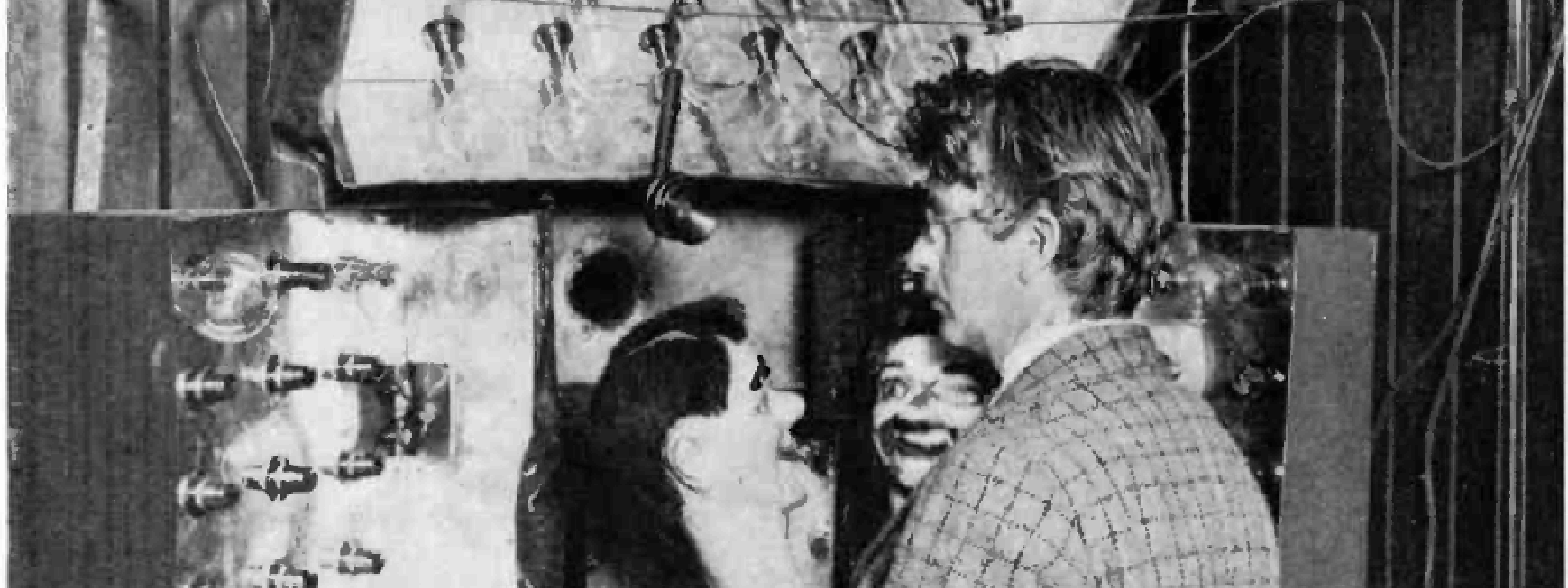
On January 26, 1926, John Logie Baird demonstrated television to a room of skeptical journalists in London’s Soho. The Times buried the story on page 9.
One hundred years later, broadcast television infrastructure remains—outlasting radio’s dominance, surviving cable, weathering the internet, and now coexisting with streaming.
The secret? Broadcast never stopped evolving. From Baird’s 30-line mechanical scanner to the BBC’s 405-line service in 1936. From black-and-white to color. From analog to digital. Each generation predicted broadcast’s death. Each time, the infrastructure adapted.
ATSC 3.0 represents the centennial evolution—and perhaps the most significant pivot yet. This is not just better television. It is infrastructure that senses.
The same transmitters delivering 4K entertainment now illuminate the sky for passive radar systems. Research shows ATSC 3.0’s signal structure enables detection ranges eight times greater than previous standards. Baird wanted us to receive images. A century later, those signals bounce off aircraft and return information.
Broadcast’s survival secret: remaining useful in ways its inventors never imagined. The signal keeps giving.
Sources: BBC History of Television, University of Strathclyde